Whether you’re planning a road trip, tracking a run, or reading international maps, knowing how to convert km to miles can save time and avoid confusion. Different countries use different measurement systems, and understanding the relationship between kilometers and miles makes travel, fitness, and navigation much easier.
In this guide, you’ll learn the simplest ways to handle kilometer-to-mile conversions, including practical examples like 10 km to miles, 100 km to miles, and even speed conversions. Everything is explained in a clear, beginner-friendly way so you can make accurate calculations without stress.
What Is the Difference Between Kilometers and Miles?
Kilometers are part of the metric system, while miles belong to the imperial system commonly used in countries like the United States and the United Kingdom.
Here’s the basic difference:
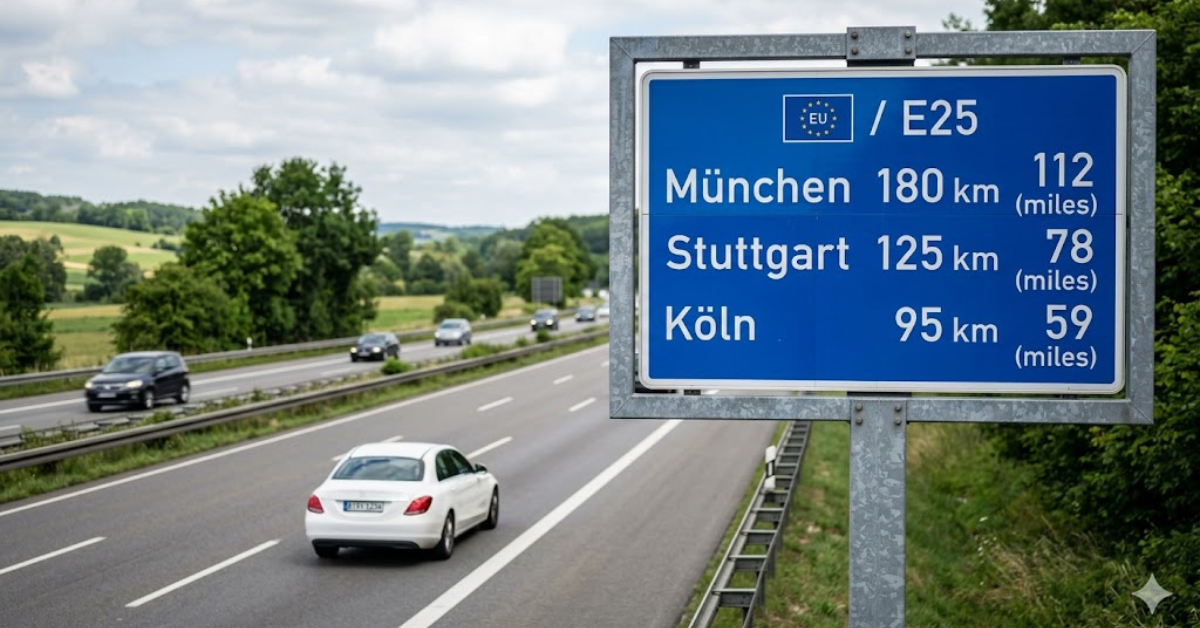
- 1 kilometer equals approximately 0.621371 miles
- 1 mile equals approximately 1.60934 kilometers
That means kilometers are slightly shorter than miles. Once you know the conversion factor, it becomes easy to switch between the two measurements.
Simple Formula for KM to Miles Conversion
To convert kilometers into miles, use this formula:
Miles=Kilometers×0.621371\text{Miles} = \text{Kilometers} \times 0.621371
For quick mental math, many people round the number to 0.62.
For example:
- 5 kilometers × 0.62 = about 3.1 miles
- 10 kilometers × 0.62 = about 6.2 miles
This shortcut is accurate enough for most everyday situations.
Common KM to Miles Examples
1 km to miles
1×0.621371≈0.621 \times 0.621371 \approx 0.62
One kilometer equals approximately 0.62 miles.
2 km to miles
Two kilometers is about 1.24 miles.
3 km to miles
Three kilometers converts to roughly 1.86 miles.
5 km to miles
A 5K race equals approximately 3.1 miles, which is why many runners use this benchmark distance.
10 km to miles
A 10K run is around 6.21 miles and is one of the most popular race distances worldwide.
15 km to miles
Fifteen kilometers converts to approximately 9.32 miles.
30 km to miles
Thirty kilometers equals about 18.64 miles.
40 km to miles
Forty kilometers converts to nearly 24.85 miles.
50 km to miles
Fifty kilometers is about 31.07 miles.
60 km to miles
Sixty kilometers equals approximately 37.28 miles.
80 km to miles
Eighty kilometers converts to roughly 49.71 miles.
100 km to miles
One hundred kilometers equals approximately 62.14 miles.
200 km to miles
Two hundred kilometers converts to around 124.27 miles.
300 km to miles
Three hundred kilometers equals approximately 186.41 miles.
500 km to miles
Five hundred kilometers converts to about 310.69 miles.
1000 km to miles
One thousand kilometers equals approximately 621.37 miles.
Quick Ways to Convert KM to Miles
You don’t always need a calculator. Here are some easy tricks to estimate distances quickly.
Multiply by 0.62
This is the fastest and most accurate shortcut for daily use.
Divide by 1.6
Another easy method is dividing kilometers by 1.6 to estimate miles.
For example:
100÷1.6≈62.5100 \div 1.6 \approx 62.5
That gives a close estimate for longer distances.
Use Mobile Conversion Tools
Most smartphones now include built-in calculators that instantly handle conversions. Voice assistants can also convert measurements in seconds.
Understanding KM to Miles Per Hour
Distance conversion also matters when dealing with speed. If you see vehicle speed limits in kilometers per hour and need miles per hour, the same principle applies.
Use this formula:
Miles Per Hour=Kilometers Per Hour×0.621371\text{Miles Per Hour} = \text{Kilometers Per Hour} \times 0.621371
Examples:
- 60 km/h is approximately 37 mph
- 100 km/h is around 62 mph
- 120 km/h equals roughly 75 mph
This conversion is especially useful for travelers driving in countries that use different speed systems.
Why KM to Miles Conversion Matters
People use kilometer and mile conversions in many everyday situations, including:
- International travel
- Running and fitness tracking
- Road signs and navigation
- Cycling distances
- Aviation and transport
- Educational purposes
Understanding these measurements helps avoid confusion and improves accuracy when reading maps, planning trips, or comparing distances.
Tips for Accurate Distance Conversion
Here are a few practical tips to improve conversion accuracy:
- Memorize the basic factor of 0.621371
- Round only when exact precision isn’t necessary
- Double-check longer calculations
- Use digital calculators for official measurements
- Learn common benchmark conversions like 5K and 10K
Over time, the numbers become familiar and much easier to estimate naturally.
Frequently Asked Questions
How many miles are in 1 kilometer?
One kilometer equals approximately 0.62 miles.
What is the fastest way to convert kilometers into miles?
Multiply the kilometer value by 0.62 for a quick estimate.
Is 5K equal to 5 miles?
No. A 5K race equals about 3.1 miles.
How many miles is 100 km?
One hundred kilometers equals roughly 62.14 miles.
How do I convert speed from km/h to mph?
Multiply kilometers per hour by 0.621371 to get miles per hour.
Why do some countries use kilometers instead of miles?
Most countries use the metric system because it is internationally standardized and easier for scientific calculations.
Which countries still use miles?
The United States and a few other countries continue using miles for road distances and speed limits.
Conclusion
Learning how to handle km to miles conversion is a useful skill for travel, sports, driving, and everyday life. Once you understand the simple formula and practice a few common examples, converting distances becomes quick and effortless.
From short runs like 5K races to long-distance travel measurements, knowing how kilometers relate to miles helps you interpret maps, speed limits, and fitness goals with confidence. Keep the conversion factor in mind, practice with common distances, and you’ll be able to estimate measurements naturally in no time.