
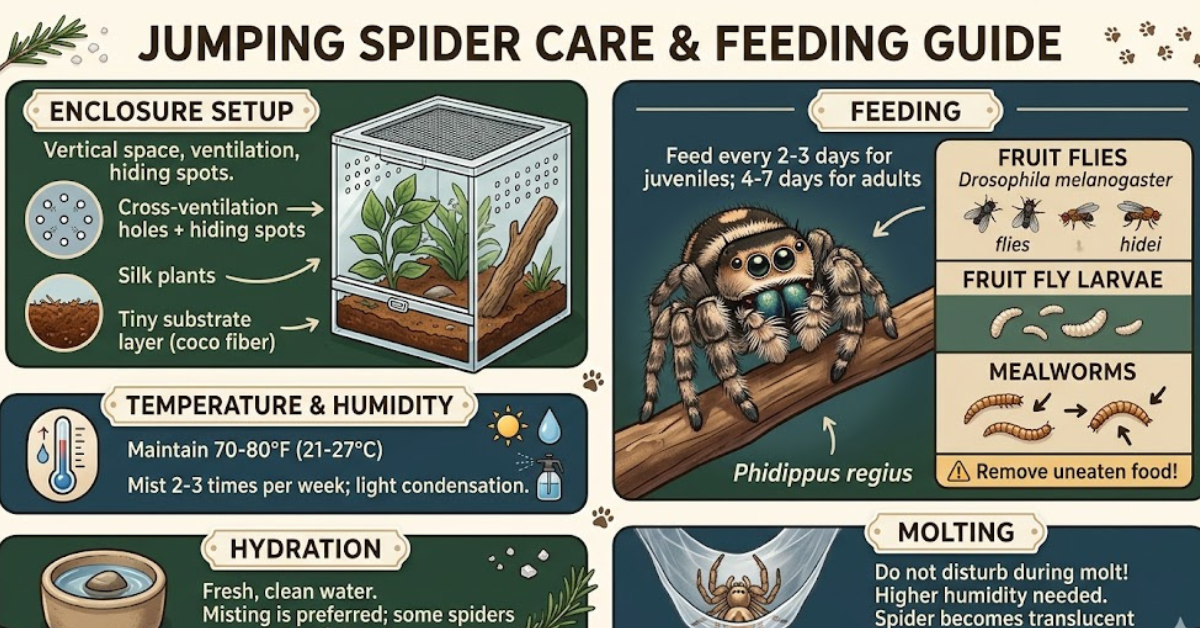
Tiny, curious, and surprisingly intelligent, jumping spiders have quickly become one of the most popular exotic pets for beginners. Unlike many other spiders, they’re active during the day, recognize movement well, and often appear more curious than defensive. That’s exactly why so many new keepers search for a reliable Jumping Spider Care & Feeding Guide before bringing one home.
If you’re thinking about caring for a pet jumping spider, this guide will walk you through everything you need to know. From enclosure setup and humidity to feeding schedules and molting, you’ll learn how to keep your spider healthy and stress-free.
What Is a Jumping Spider?
Jumping spiders belong to the Salticidae family, one of the largest spider families in the world. They are famous for:
- Excellent vision
- Quick jumping abilities
- Curious behavior
- Compact size
- Bright colors and patterns
Popular pet species include:
- Regal jumping spiders
- Bold jumping spiders
- Zebra jumping spiders
Unlike web-building spiders, jumping spiders actively hunt prey using speed and precision.
Why Jumping Spiders Make Great Pets
Many beginners feel nervous around spiders, but jumping spiders are often different from what people expect.
Reasons they’re popular pets:
- Small and easy to care for
- Minimal space requirements
- Interesting personalities
- Low odor and low maintenance
- Generally calm temperament
Some owners even describe them as “puppy-like” because of their curious behavior and eye contact.
Choosing the Right Enclosure
A proper habitat is one of the most important parts of any Jumping Spider Care & Feeding Guide.
Ideal enclosure features:
- Good ventilation
- Vertical climbing space
- Secure lid
- Dry, clean environment
Most adult jumping spiders do well in enclosures around:
- 6–8 inches tall
- 4–6 inches wide
Since these spiders love climbing, height matters more than floor space.
Best Substrate for Jumping Spiders
Substrate helps maintain humidity and cleanliness.
Common substrate choices:
- Coconut fiber
- Reptile soil
- Peat moss
- Paper towel for simple setups
Avoid overly wet substrates because excessive moisture can encourage mold and bacteria.
Temperature and Humidity Requirements
Most pet jumping spiders thrive in normal household conditions.
Recommended temperature:
- 72°F to 82°F
Humidity levels:
- Moderate humidity works best for most species
- Tropical species may require slightly higher humidity
Light misting every few days is usually enough. Avoid soaking the enclosure.
Lighting Needs
Jumping spiders are daytime hunters and enjoy bright environments.
Helpful lighting tips:
- Indirect natural light works well
- LED daylight bulbs can support activity
- Avoid direct intense sunlight
Proper lighting encourages natural hunting behavior and activity.
What Do Jumping Spiders Eat?
Feeding is one of the most important topics in any Jumping Spider Care & Feeding Guide.
Jumping spiders are carnivorous hunters that eat live insects.
Common feeder insects:
- Fruit flies
- Small crickets
- House flies
- Mealworms
- Roaches
The prey should never be larger than the spider’s body size.
Jumping Spider Feeding Schedule
Young spiders eat more often than adults.
General feeding guidelines:
Spiderlings
- Feed every 1–2 days
Juveniles
- Feed every 2–3 days
Adults
- Feed 2–3 times weekly
A healthy spider usually has a slightly rounded abdomen.
How to Offer Food Properly
Feeding live prey is usually straightforward.
Tips for safe feeding:
- Place prey gently inside the enclosure
- Remove uneaten insects after several hours
- Avoid aggressive feeder insects
- Watch for hunting behavior
Crickets left unattended can sometimes injure molting spiders, so monitoring is important.
Water and Hydration
Although tiny, jumping spiders still need water access.
Safe hydration methods:
- Light misting on enclosure walls
- Small water droplets on decorations
- Moist cotton ball in some setups
Never place deep water dishes inside small enclosures because spiders can drown.
Understanding Molting in Jumping Spiders
Molting is when the spider sheds its old exoskeleton to grow.
Signs of an upcoming molt:
- Refusing food
- Staying inside web hammock
- Reduced activity
- Duller coloration
During this time, avoid handling or disturbing the spider.
What to Do During a Molt
Molting is a vulnerable stage.
Important care tips:
- Maintain proper humidity
- Do not feed live prey
- Avoid touching the enclosure excessively
- Give the spider time to recover
After molting, the spider may need several days before eating again.
Handling Jumping Spiders Safely
One reason people enjoy these spiders is their calm nature.
Safe handling tips:
- Let the spider walk onto your hand voluntarily
- Move slowly and calmly
- Avoid sudden movements
- Handle close to soft surfaces in case they jump
Most jumping spiders prefer exploring rather than biting.
Common Health Problems
Healthy spiders are active, alert, and responsive.
Possible warning signs:
- Shriveling abdomen
- Difficulty climbing
- Lack of movement
- Failed molts
- Refusal to eat for long periods
Poor humidity, dehydration, or incorrect temperatures are common causes of problems.
Cleaning the Enclosure
A clean enclosure helps prevent bacteria and mold.
Cleaning routine:
- Remove dead insects regularly
- Spot-clean waste weekly
- Replace substrate when necessary
- Wipe enclosure walls gently
Avoid strong cleaning chemicals around spiders.
Beginner Mistakes to Avoid
New keepers often make simple mistakes that can stress their spider.
Common errors:
- Overfeeding
- Excessive misting
- Using oversized prey
- Too much handling
- Poor ventilation
Keeping the setup simple usually works best for beginners.
How Long Do Jumping Spiders Live?
Lifespan depends on species and sex.
Average lifespan:
- Males: about 1–2 years
- Females: often slightly longer
Good care, proper feeding, and safe molting conditions can help maximize lifespan.
Are Jumping Spiders Dangerous?
Most jumping spiders are harmless to humans.
Important facts:
- Bites are rare
- Venom is mild
- They are usually shy and non-aggressive
For most people, they are considered one of the safest spider pets available.
FAQs About Jumping Spider Care
1. What do jumping spiders eat?
They eat live insects such as fruit flies, crickets, flies, and mealworms.
2. How often should I feed a jumping spider?
Spiderlings need food more often, while adults usually eat two or three times weekly.
3. Can jumping spiders recognize humans?
They may recognize movement and become familiar with regular interaction, though not in the same way mammals do.
4. Do jumping spiders need heat lamps?
Most species do well at normal room temperatures and usually don’t require special heating.
5. Is handling safe?
Yes, gentle handling is generally safe if done carefully and calmly.
6. Why is my jumping spider not eating?
Molting, stress, low temperatures, or aging can reduce appetite temporarily.
Conclusion
Keeping a pet spider may sound intimidating at first, but jumping spiders are surprisingly beginner-friendly. With the right enclosure, proper humidity, safe feeding practices, and patience during molting, these tiny hunters can thrive in captivity.
This Jumping Spider Care & Feeding Guide covers the essentials every new owner should know, from choosing feeder insects to maintaining a healthy habitat. Whether you’re fascinated by their intelligence or simply looking for a unique low-maintenance pet, jumping spiders can be rewarding companions when cared for properly.