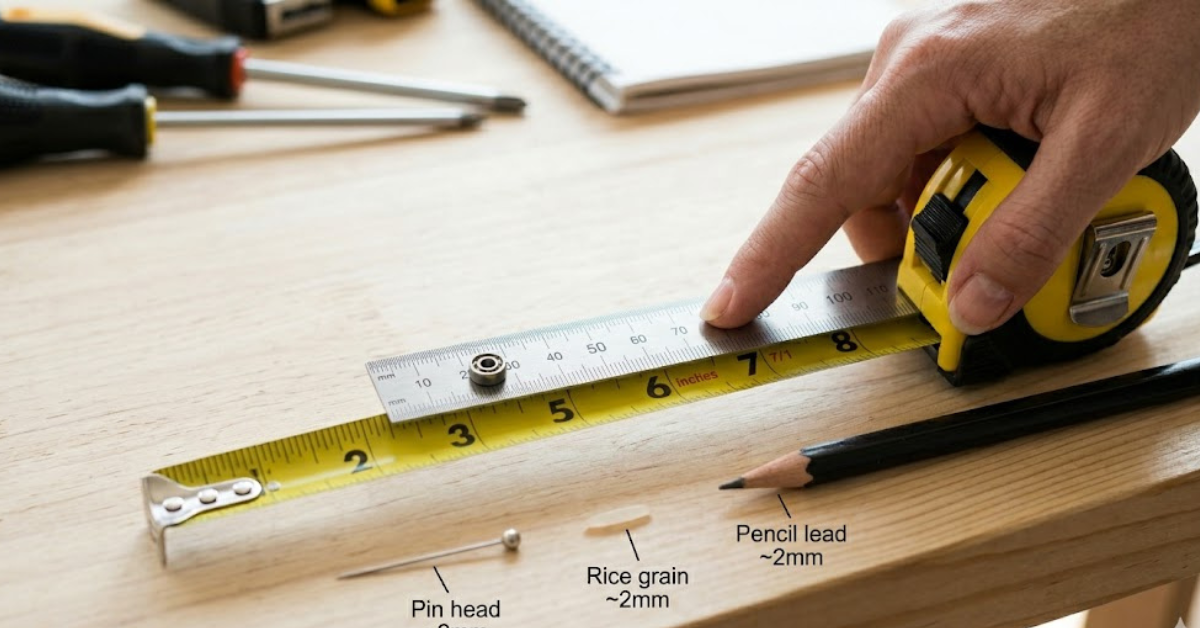
If you’ve ever worked on a DIY project, engineering drawing, or even a simple home improvement task, you’ve likely come across the need to convert inches into millimeters. It might seem confusing at first, but once you understand the basic rule, it becomes quick and effortless.
This guide explains how the conversion works in a simple, practical way so you can confidently handle measurements without second-guessing yourself. Whether you’re dealing with tools, furniture dimensions, or technical specifications, the process becomes very straightforward once you learn the core formula.
Understanding the Conversion
This measurement conversion is widely used in engineering, construction, and everyday life. The metric system (millimeters) offers higher precision, while inches are commonly used in countries like the United States.
The key relationship you need to remember is:
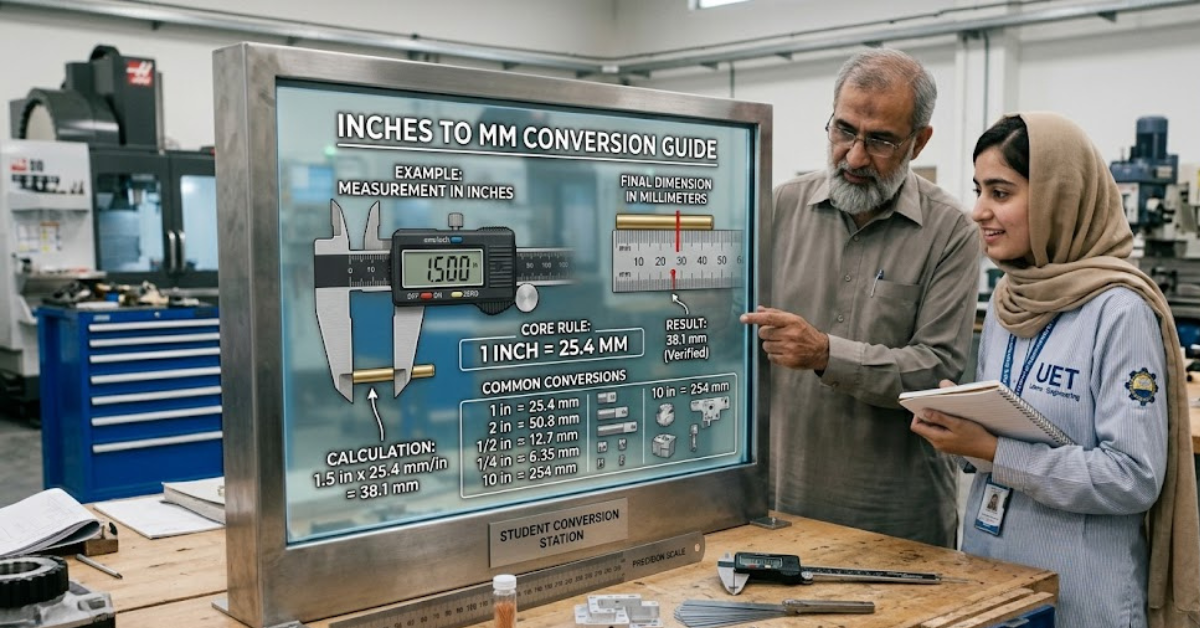
1 inch = 25.4 millimeters
Once you know this, all calculations become simple multiplication.
Simple Conversion Formula
To convert inches into millimeters, use this formula:
Millimeters = Inches × 25.4
This works for all values, whether whole numbers, decimals, or fractions.
Examples:
- 2 inches = 2 × 25.4 = 50.8 mm
- 5 inches = 5 × 25.4 = 127 mm
Quick Reference Values
Here are commonly used conversions for quick access:
- 2.5 in = 63.5 mm
- 1.5 in = 38.1 mm
- 0.25 in = 6.35 mm
- 2.25 in = 57.15 mm
- 3.5 in = 88.9 mm
- 5.5 in = 139.7 mm
- 0.75 in = 19.05 mm
- 1.25 in = 31.75 mm
- 3 in = 76.2 mm
- 4.5 in = 114.3 mm
- 4 in = 101.6 mm
- 2.75 in = 69.85 mm
- 0.5 in = 12.7 mm
- 1.75 in = 44.45 mm
- 6 in = 152.4 mm
These values are especially helpful when you need quick answers without doing manual calculations.
Why This Conversion Is Important
Accurate unit conversion is essential because even small errors can lead to incorrect fittings, wasted materials, or design issues.
It is commonly used in:
- Engineering and manufacturing
- Construction and architecture
- DIY home improvement projects
- Reading international product specifications
- Online shopping for tools and parts
Knowing how to switch between systems improves accuracy and saves time.
Common Mistakes to Avoid
Even though the formula is simple, people often make small errors such as:
- Forgetting the exact conversion value (25.4)
- Rounding numbers too early
- Mixing metric and imperial units in one project
- Misreading decimal values like 0.25 or 0.75
Avoiding these mistakes ensures better accuracy.
Frequently Asked Questions
What is the fastest way to convert inches into millimeters?
Multiply the inch value by 25.4.
How do I convert 0.5 inches?
0.5 × 25.4 = 12.7 mm.
Why is 25.4 used in this conversion?
It is the internationally standardized value defining the relationship between the two units.
Is this conversion used in real life?
Yes, especially in construction, engineering, manufacturing, and product sizing.
Can I estimate the value without exact calculation?
Yes, but for accuracy, the exact formula is always recommended.
Conclusion
Converting inches into millimeters is a simple but highly useful skill. Once you understand the basic formula, you can quickly handle measurements in both metric and imperial systems with confidence.
With the reference values and formula provided above, you now have a reliable guide for accurate and fast conversions anytime you need them.