Sometimes ruler measurements don’t mean much until you compare them to familiar objects. If you’ve ever tried to picture seven inches in real life, you’re definitely not alone.
Whether you’re measuring hair, checking screen sizes, comparing products, or estimating dimensions for a project, everyday examples make this length much easier to understand.
What Does Seven Inches Look Like?
Seven inches is slightly more than half a foot. In metric measurement, it equals:
- 17.78 centimeters
- 177.8 millimeters
Instead of focusing only on numbers, it helps to compare the size with objects you already recognize.
Here are a few quick visual references:
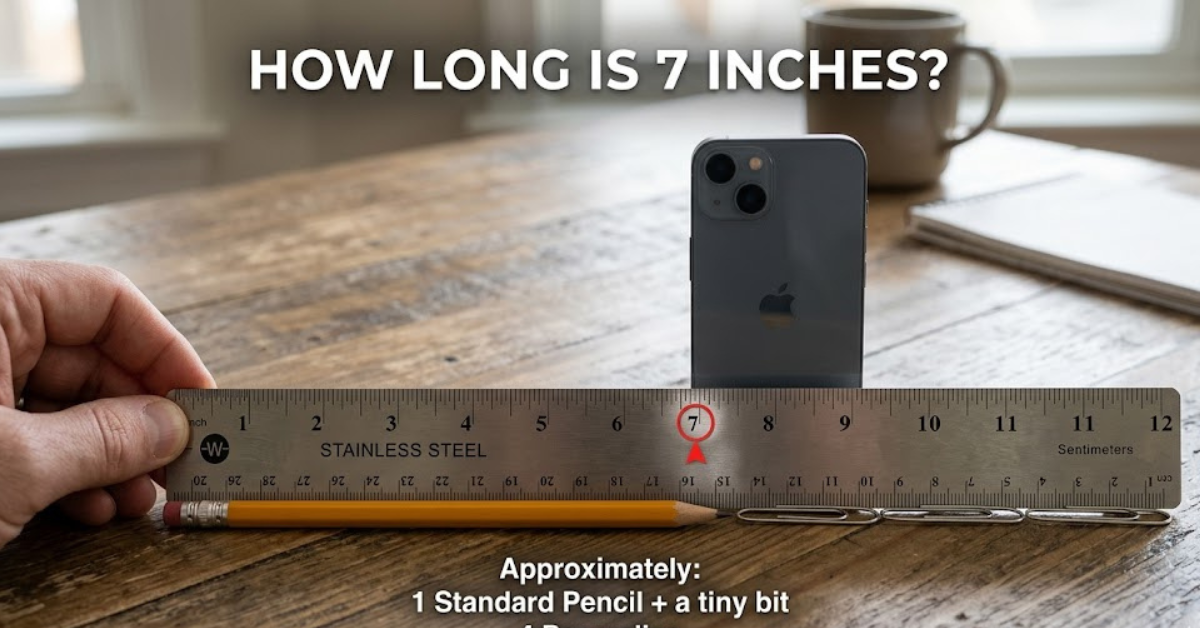
- About the length of a standard pencil
- Similar to a large smartphone
- Roughly the size of an adult hand from wrist to fingertip
- Slightly shorter than the width of printer paper
- Close to two soda cans placed side by side
These examples make the measurement much easier to picture in everyday situations.
Understanding It on a Ruler
A standard ruler measures 12 inches total, so seven inches sits just past the halfway point.
To find it:
- Place the ruler flat
- Start at the “0” mark
- Count to the number “7”
The distance between those points equals seven inches exactly.
Printable rulers and phone measuring apps can also help if you don’t have a physical ruler nearby.
Conversion to Centimeters
For metric users:
- 7 inches = 17.78 cm
- 7 inches = 177.8 mm
This conversion is especially useful for:
- Online shopping
- Furniture measurements
- DIY projects
- School assignments
- Hair length comparisons
Everyday Objects Around This Size
Many household items are close to seven inches long, including:
- A butter knife
- A toothbrush
- A TV remote
- A paperback book width
- A large smartphone
Using familiar objects helps estimate size quickly without measuring tools.
Hair Length Comparison
Hair can appear different depending on texture and styling.
Generally:
- Straight hair around seven inches often reaches the neck or shoulders
- Curly hair may appear shorter because of shrinkage
- For men, it’s considered relatively long
- For women, it usually falls into the medium-length range
Most people searching about hair length want a visual estimate rather than an exact calculation.
Comparing It to Your Hand
An average adult hand measures close to seven inches from the wrist crease to the tip of the middle finger.
That makes your hand a useful quick reference when you don’t have a ruler available.
Conversion to Feet
Since one foot equals 12 inches:
- 7 inches = 0.583 feet
In simple terms, it’s slightly longer than half a foot.
Easy Ways to Estimate Without a Ruler
If you need a quick estimate, try these simple tricks:
Use Everyday Objects
Compare the length with:
- A pencil
- A phone
- A toothbrush
- A paperback book
Use Paper
A standard sheet of paper is 8.5 inches wide, so this measurement is slightly shorter than that.
Use Your Hand
For many adults, hand length gives a close approximation.
Why People Search This Measurement
People commonly look up measurements like this when:
- Buying products online
- Comparing screen sizes
- Measuring hair growth
- Planning DIY projects
- Understanding furniture dimensions
Visual comparisons often help more than numbers alone.
Is Seven Inches Big or Small?
That depends entirely on context.
For example:
- Large for a phone screen
- Medium for hair length
- Small for furniture
- Average for kitchen tools
Measurements only make sense when compared to the object involved.
Simple Memory Tricks
To remember the size easily:
- Picture a pencil
- Think of a large smartphone
- Use your hand length
- Imagine slightly more than half a ruler
These mental references make everyday estimating much easier.
Common Estimation Mistakes
People often misjudge measurements because they:
- Confuse inches with centimeters
- Ignore object proportions
- Estimate without visual references
- Forget screens are measured diagonally
Using familiar objects improves accuracy significantly.
FAQs
How many centimeters is seven inches?
It equals 17.78 centimeters.
What object is about this long?
A pencil, toothbrush, or smartphone are common examples.
Is it bigger than half a foot?
Yes. Half a foot is 6 inches.
Can I estimate it without a ruler?
Yes. Phones, pencils, and hand length work as rough references.
How does this hair length look?
It typically reaches the neck or shoulder area, depending on hair type and height.
Conclusion
Understanding this measurement becomes much easier when you compare it to real-world objects instead of abstract numbers. From pencils and smartphones to hand size and hair length, familiar references help create a clear mental picture.
Whether you’re measuring products, estimating dimensions, or comparing sizes online, these practical examples make visualization quicker and more accurate.