If you’ve ever searched for distance conversion, you’re definitely not alone. Whether you’re planning a road trip, tracking a run, or reading international travel data, converting metric distances into miles is something most people need at some point. The good news is—it’s actually very simple once you understand the basic formula.
In this guide, we’ll break down the kilometer-to-mile conversion, show real-life examples like 10 km in miles, 100 km in miles, and explain how speed conversions like km/h to mph work. Everything is clear, practical, and easy to follow.
What Are Kilometers and Miles?
Before jumping into calculations, let’s understand the basics.
- Kilometer (km): A metric unit used in most countries worldwide.
- Mile (mi): A unit commonly used in the United States and a few other regions.
When you see distances in kilometers, converting them into miles helps make the numbers more familiar if you’re used to the imperial system.
Basic Conversion Formula
The standard conversion rule is:
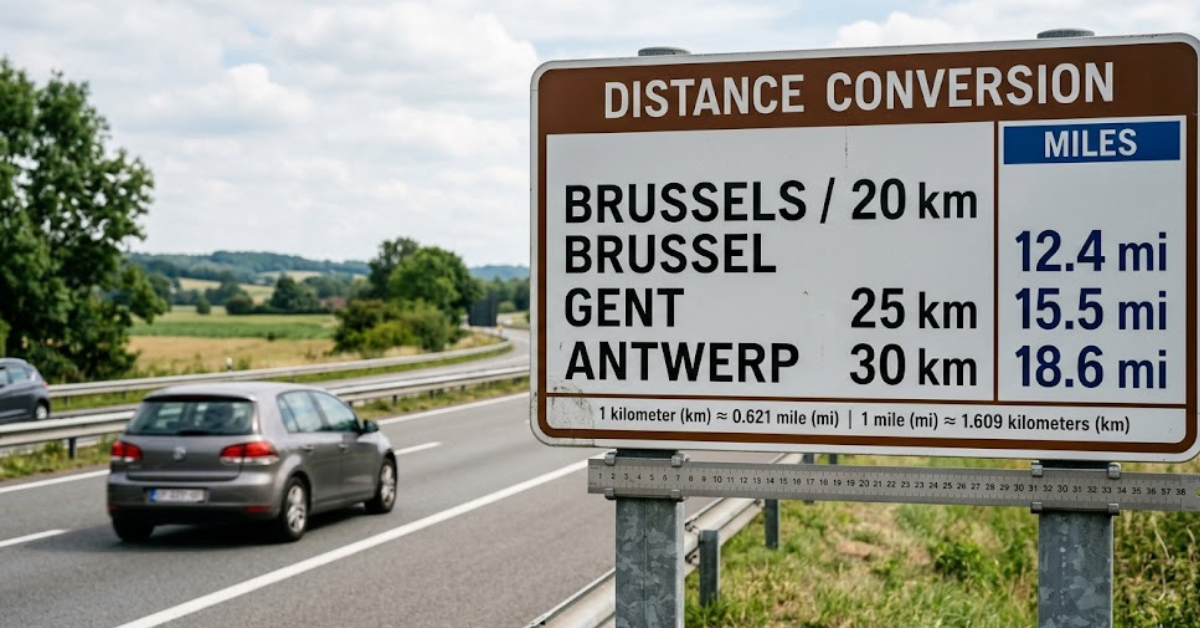
1 kilometer = 0.621371 miles
To convert, simply multiply the distance in kilometers by 0.621371.
Miles = Kilometers × 0.621371
This applies to all values, whether small or large.
Common Distance Conversions
Here are frequently searched examples:
1 km = 0.62 miles (approx.)
2 km = 1.24 miles
3 km = 1.86 miles
4 km = 2.49 miles
5 km = 3.11 miles
6 km = 3.73 miles
7 km = 4.35 miles
10 km = 6.21 miles
12 km = 7.46 miles
15 km = 9.32 miles
Larger Distance Examples
For longer routes or travel planning:
30 km = 18.64 miles
40 km = 24.85 miles
50 km = 31.07 miles
80 km = 49.71 miles
100 km = 62.14 miles
300 km = 186.41 miles
These values are commonly used in road trips, mapping, and international travel comparisons.
Speed Conversion (km/h to mph)
The same conversion factor is used for speed:
1 km/h = 0.621371 mph
Examples:
- 60 km/h = 37.28 mph
- 100 km/h = 62.14 mph
This is useful when comparing vehicle speeds across countries that use different systems.
Quick Estimation Trick
If you don’t need exact precision, use this shortcut:
Multiply by 0.6
It gives a close approximation and is helpful for quick mental calculations.
Why This Conversion Matters
Understanding metric-to-imperial conversion is useful for:
- International travel
- Fitness tracking apps
- Driving abroad
- Reading global maps
- Comparing distances worldwide
It helps you interpret distance more easily without relying on calculators.
FAQs
How do you convert km to miles quickly?
Multiply by 0.621371 or use 0.6 for a quick estimate.
What is 1 km in miles?
1 km equals 0.621371 miles.
What is 10 km in miles?
10 km equals 6.21 miles.
What is 100 km in miles?
100 km equals 62.14 miles.
Is speed conversion the same?
Yes. km/h converts to mph using the same factor (0.621371).
Conclusion
Distance conversion between metric and imperial units is simple once you understand the formula. Whether you’re converting small values like 5 km or larger distances like 100 km, the same multiplier always applies.
With practice, you won’t need a calculator—you’ll quickly estimate distances in your head and understand travel or fitness data much more easily.