Measurements are much easier to understand when you compare them to familiar objects. If you’ve ever wondered what two inches actually looks like, you’re not alone. Many people search for real-life examples because ruler markings alone can feel abstract.
Whether you’re measuring jewelry, tattoos, crafts, snowfall, or small household items, visual comparisons make this small measurement far easier to picture.
What Does 2 Inches Look Like?
Two inches equals:
- 5.08 centimeters
- 50.8 millimeters
- About 0.16 feet
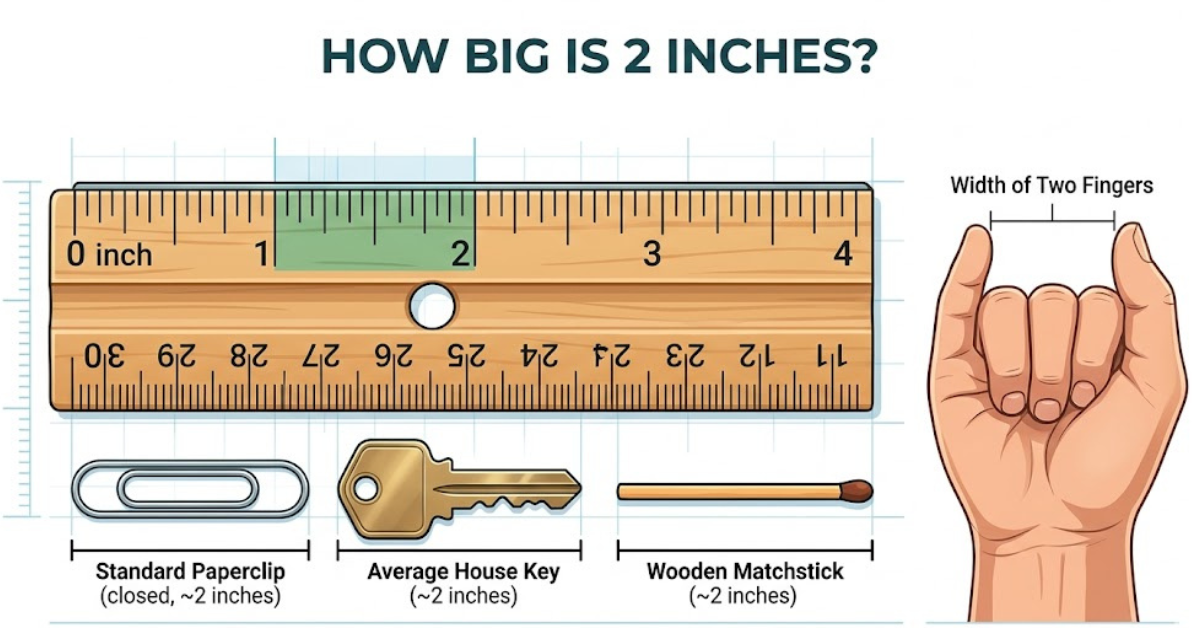
On a standard ruler, it’s the distance from the “0” mark to the number “2.”
Although it sounds small, two inches is larger than many people expect when viewed next to everyday objects.
Everyday Objects That Are About 2 Inches Long
One of the easiest ways to picture this size is through common items you already recognize.
Examples include:
- A large paperclip
- A golf tee
- The width of two adult fingers together
- A USB flash drive
- The diameter of a lime
These comparisons help create a quick mental image without needing a ruler nearby.
What It Looks Like on a Ruler
A ruler gives the clearest reference point.
To measure it:
- Place the ruler flat on a surface
- Start at the “0” mark
- Count to the number “2”
- The space between those marks equals two inches
Since most rulers are 12 inches long, this measurement takes up about one-sixth of the ruler.
Size Comparison in Centimeters
Many countries use the metric system, so conversions are often useful.
Exact conversion:
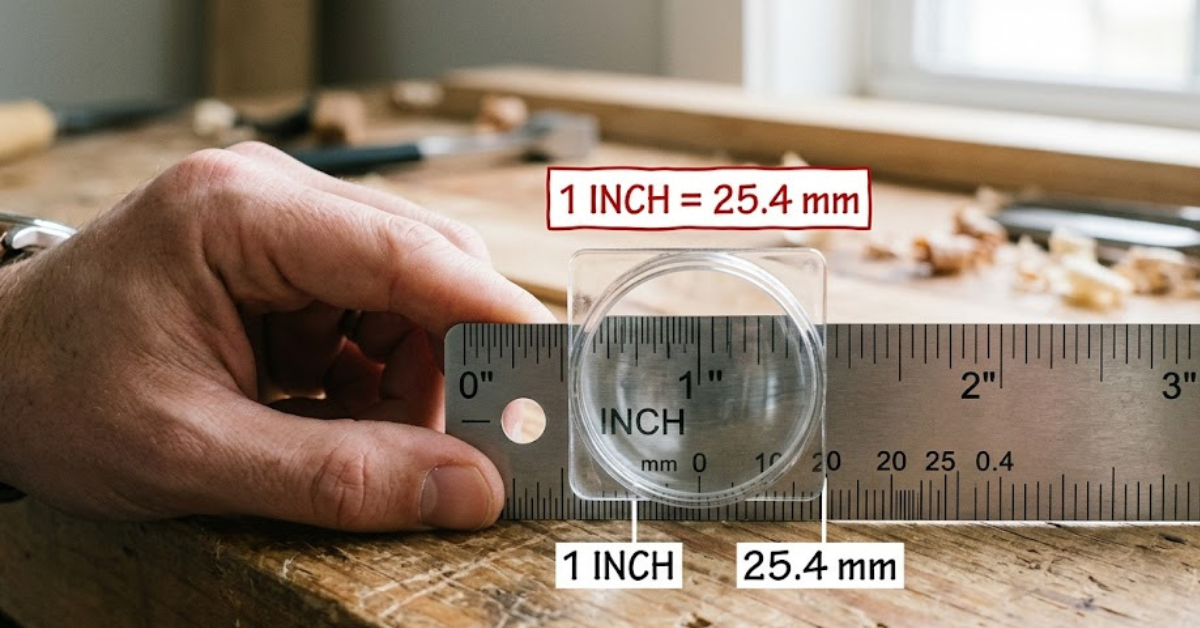
- 2 inches = 5.08 cm
- 2 inches = 50.8 mm
So if an object measures around 5 centimeters, it’s very close to two inches.
Circular Objects With a 2-Inch Diameter
When measuring round items, diameter means the distance across the center.
Objects close to this size include:
- A tennis ball
- A cupcake top
- A drink coaster
- A small orange
This helps when measuring containers, crafts, pipes, or circular designs.
Understanding Width and Small Areas
A width of two inches is compact but still noticeable.
Examples:
- Three stacked coins
- A cosmetic container
- A folded sticky note section
- Two fingers side by side
A 2-inch by 2-inch square is about the size of:
- A small label
- A passport photo
- A folded sticky note
Meanwhile, a 2×3-inch rectangle resembles:
- A wallet photo
- A mini recipe card
- A small notepad
These dimensions are common in crafts, printing, and packaging.
Tattoo Size Reference
For tattoos, this size is usually considered small to medium.
Popular designs include:
- Initials
- Small flowers
- Minimalist symbols
- Tiny animals
- Small geometric designs
This size fits comfortably on wrists, ankles, or behind the ear.
Snowfall Example
Two inches of snow may sound minor, but it becomes very visible outdoors.
It usually means:
- Light to moderate snowfall
- Covered roads and rooftops
- Slippery driving conditions
Even a small accumulation can noticeably affect travel.
Easy Ways to Estimate Without a Ruler
If you don’t have measuring tools nearby, try these simple tricks.
Use Your Fingers
Two adult finger widths placed together are close to two inches.
Compare With Coins
Two U.S. quarters side by side measure close to this length.
Use a Credit Card
A credit card is about 3.37 inches wide, so two inches is slightly more than half its width.
Why Small Measurements Feel Hard to Judge
People often misjudge short lengths because the eye lacks clear reference points.
Common mistakes include:
- Confusing inches with centimeters
- Overestimating short distances
- Judging screen sizes inaccurately
- Ignoring scale differences
Using familiar objects improves accuracy quickly.
FAQs
How big is 2 inches in centimeters?
Two inches equals 5.08 centimeters.
What object is around this size?
A golf tee, USB drive, or large paperclip are all close examples.
Is two inches considered small?
Yes. In most everyday situations, it’s viewed as compact or small.
Can I estimate it without a ruler?
Yes. Fingers, coins, and household objects work as quick references.
How large is a 2-inch tattoo?
It’s considered small to medium-sized and works well for minimalist designs.
Conclusion
Understanding this measurement becomes much easier when you connect it to real-world objects instead of abstract numbers. From paperclips and golf tees to tattoos and snowfall, familiar comparisons make estimating size much more natural.
Whether you’re measuring crafts, comparing products, or satisfying curiosity, these visual references can help you picture two inches more confidently in everyday life.