Bottle size might seem like a small detail, but it plays a big role in everyday use. Whether you’re choosing a bottle for hydration, workouts, travel, or storage, understanding size, shape, and capacity helps you make a smarter choice.
From compact 500ml bottles to large 5-gallon containers, water bottles come in many forms. In this guide, we’ll break down common sizes, popular brands, and what those measurements mean in real life.
What Do Water Bottle Measurements Mean?
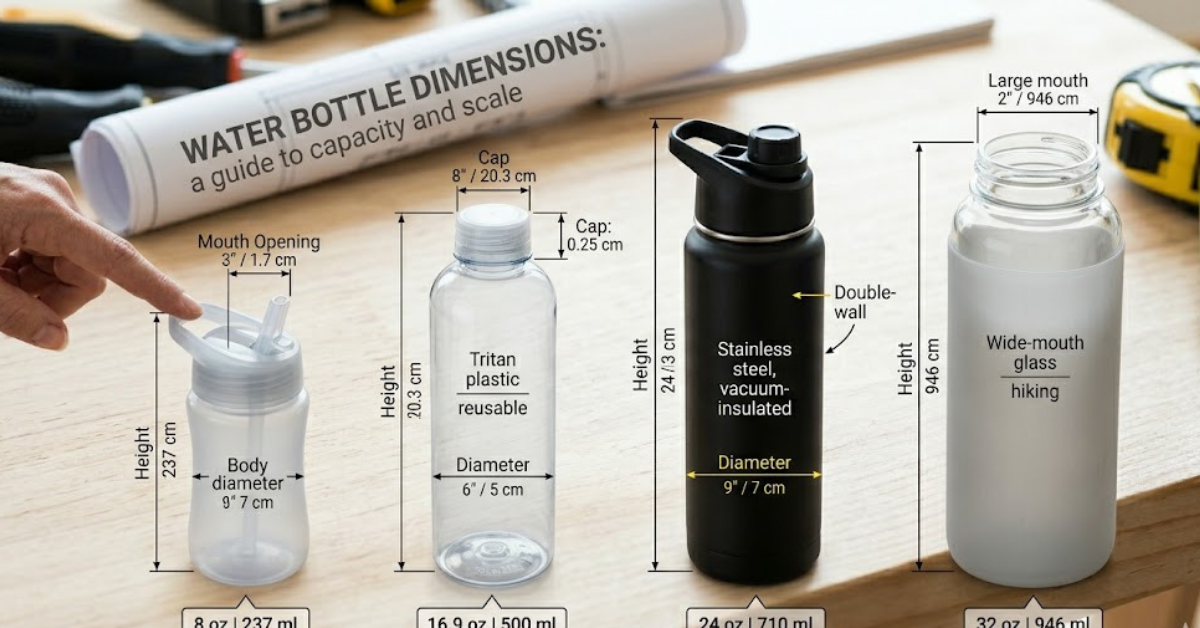
When people talk about bottle size, they usually refer to three key factors:
- Height (how tall the bottle is)
- Diameter (how wide it is)
- Capacity (how much liquid it holds)
Most bottles are labeled in ounces (oz) or milliliters (ml), but physical shape can vary widely. Two bottles with the same capacity may look completely different depending on design.
Standard Bottle Size Explained
The most common single-use and reusable bottles fall into a familiar range:
- Height: 7 to 8 inches
- Diameter: 2.5 to 3 inches
- Capacity: around 500ml (16.9 oz)
This size is popular because it’s easy to carry, fits in most cup holders, and is convenient for daily hydration.
16.9 oz Bottle Size
This is the most widely used bottled water size globally.
Typical measurements:
- Height: about 8 inches
- Diameter: around 2.5 inches
- Capacity: 500ml (16.9 oz)
It’s commonly used by major bottled water brands because it balances portability and practicality.
16 oz Bottle Size
Slightly smaller but very similar in appearance.
- Height: 7 to 7.8 inches
- Diameter: 2.3 to 2.6 inches
- Capacity: 473ml (16 oz)
This version is often found in reusable gym bottles and compact designs.
500ml Bottle Size
This is the metric equivalent of the standard disposable bottle.
- Height: around 7.5 to 8 inches
- Diameter: about 2.5 inches
- Capacity: 500ml
It’s widely used in countries that follow the metric system and is popular for travel and school use.
Popular Brand Bottle Designs
Different brands shape their bottles differently for comfort, branding, and usability.
Dasani Bottles
- Height: ~8 inches
- Slim cylindrical design
- Easy-grip texture
Poland Spring Bottles
- Height: ~7.8–8 inches
- Slightly wider base
- Comfortable squeeze design
Pure Life Bottles
- Height: ~8 inches
- Lightweight plastic build
- Standard 500ml capacity
Fiji Bottles
- Height: ~8.5 inches
- Square-shaped design
- Premium appearance
Evian Bottles
- Height: ~7.9 inches
- Slim and curved
- Lightweight and ergonomic
Owala Bottle Sizes (Reusable Range)
These bottles are designed for insulation and daily use.
- 24 oz: ~10 inches tall
- 32 oz: ~11–11.5 inches
- 40 oz: ~12–12.5 inches
Larger sizes provide better hydration capacity but reduce portability.
Smart Bottle Sizes
Smart bottles include tracking or hydration sensors.
Typical range:
- Height: 8 to 10 inches
- Diameter: 2.8 to 3.2 inches
They are slightly heavier due to built-in electronics.
Nalgene Bottles
Popular among hikers and outdoor users.
- Height: ~8.25 inches (32 oz version)
- Wide-mouth design
- Extremely durable build
These prioritize strength over compact design.
5-Gallon Bottle Size
Used for home dispensers and offices.
- Height: 19 to 22 inches
- Diameter: 10 to 11 inches
- Capacity: 18.9 liters
These are not meant for carrying but for bulk water storage.
Why Bottle Size Matters
Choosing the right size affects daily convenience:
- Fits better in bags and cup holders
- Helps with hydration planning
- Improves portability during travel
- Impacts storage and usability
- Affects how comfortable it is to carry
Even small differences in shape can make a big difference in real-world use.
FAQs
What is the most common bottle size?
The most common is 500ml (16.9 oz), widely used around the world.
Are all 16 oz bottles the same?
No, capacity may be similar, but shape and height often vary by brand.
How big are Owala bottles?
They range from 24 oz to 40 oz, with different heights depending on size.
How large is a 5-gallon bottle?
Around 19–22 inches tall, used mainly for dispensers.
Why do bottle sizes vary?
Brands adjust design for comfort, branding, portability, and usability.
Conclusion
Understanding bottle sizes helps you choose the right option for your lifestyle—whether it’s a compact daily bottle, a durable outdoor container, or a large home dispenser.
Each size serves a different purpose, and knowing the differences makes it easier to pick the one that fits your needs best.