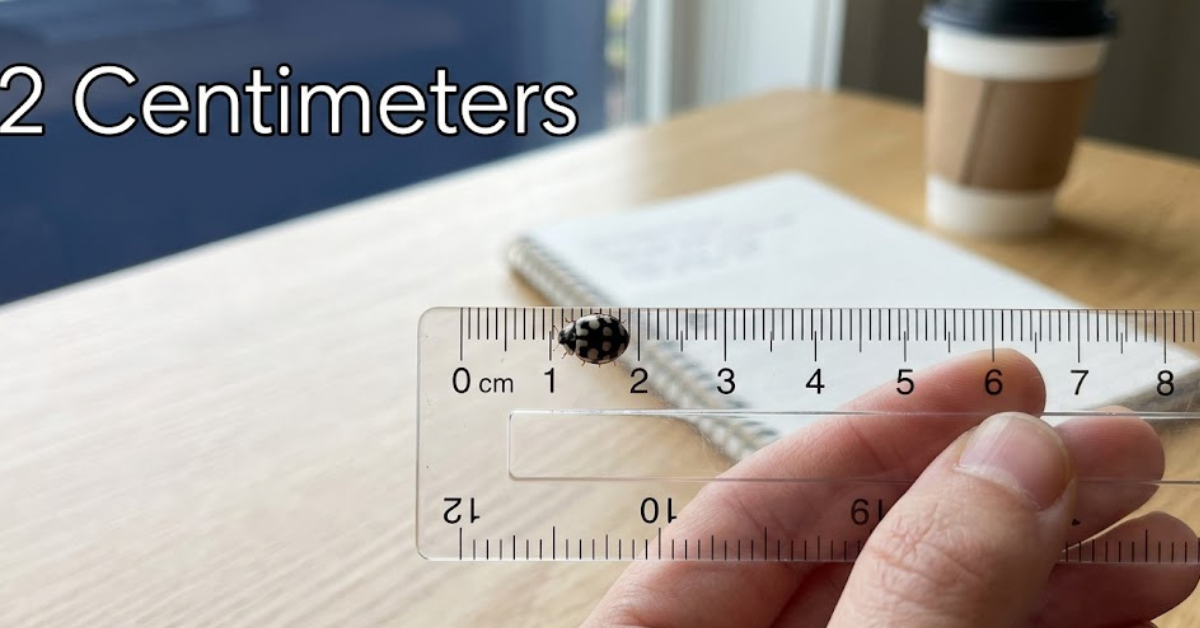
To put it simply, 2 centimeters is a very small length—about the width of a fingernail or a small coin.
On a standard metric ruler, it appears as:
- Two small markings after zero
- Less than one inch in length
- Roughly the size of a small button
So, it is a tiny but clearly measurable distance.
Conversion to Inches
A common question is its equivalent in the imperial system.
- 1 centimeter = 0.393 inches
- 2 centimeters = 0.79 inches
So, it is slightly less than one inch in total length, making it easy to estimate visually.
What It Looks Like Visually
To understand its visual size, compare it with everyday objects:
- Width of a pencil eraser
- Diameter of a small button
- Thickness of two stacked coins
- Length of a small paperclip section
These comparisons help you imagine it without needing a ruler.
Appearance on a Ruler
On a metric ruler, this measurement is very easy to identify:
- It stretches from 0 to the second centimeter mark
- Equals 20 millimeters in total
- Clearly visible as a short segment
Because of its simplicity, it is often used in basic measurements.
Comparison With Everyday Objects
To make it more relatable, think of:
- A pea or small grape
- A thumbnail width
- A small LEGO block
- A shirt button
These real-world references make the size easy to visualize instantly.
Diameter Example
When used as a diameter, this size represents:
- A circle measuring 2 cm across
- About the width of a small coin
- Small enough to fit on a fingertip
This is common in jewelry, crafts, and small mechanical parts.
Why This Measurement Is Useful
Even though it is small, this unit is used in many areas:
- Craft and DIY projects
- Jewelry sizing
- Online product descriptions
- Cooking and science experiments
It appears more often in daily life than most people expect.
Quick Summary
- Slightly less than 1 inch
- About the size of a coin or button
- Equal to 20 millimeters
- Easy to spot on a ruler
FAQs
What is its value in inches?
It is approximately 0.79 inches.
How does it look visually?
It is similar to a small button, pea, or pencil eraser.
How is it shown on a ruler?
It covers the first two centimeter markings (20 mm).
How does it compare to inches?
It is just under one inch.
What does it look like in diameter?
It is roughly the size of a small coin.
Conclusion
This small measurement becomes easy to understand when compared with everyday objects like coins, buttons, and pencil erasers. Although tiny, it is widely used in real-life situations ranging from crafts to product sizing.
Once you know what to look for, you can quickly recognize it without any confusion.