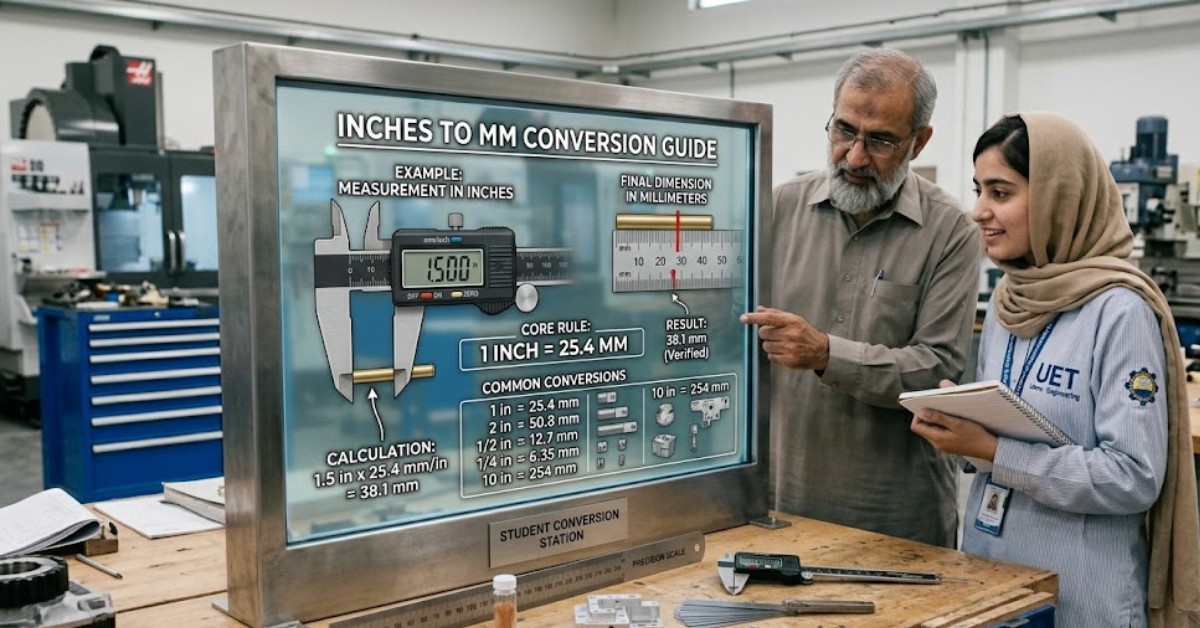

Measurements can be confusing, especially when switching between metric and imperial systems. Whether you are checking your height, measuring a room, working on construction projects, or studying physics, understanding m to ft conversion is incredibly useful.
The good news is that converting meters to feet is much easier than it looks. Once you know the basic formula, you can quickly calculate distances, heights, and dimensions without relying on complicated tools. In this guide, you’ll learn how to convert meters into feet, understand common examples, and explore related conversions like feet and inches or torque measurements.
What Does M to Ft Mean?
The phrase m to ft refers to converting meters into feet.
- Meter (m) is part of the metric system
- Foot (ft) belongs to the imperial system
Meters are commonly used in most countries around the world, while feet are more common in the United States and a few other regions.
Basic Conversion Formula
To convert meters into feet:
Feet=Meters×3.28084\text{Feet} = \text{Meters} \times 3.28084
This means one meter equals approximately 3.28 feet.
1 M to Ft Explained
One of the most searched conversions online is 1 m to ft.
1 m≈3.28084 ft1 \text{ m} \approx 3.28084 \text{ ft}
So, if an object is one meter long, it measures slightly over three feet.
This conversion is useful for:
- Measuring height
- Furniture dimensions
- Gym equipment
- Sports measurements
Common M to Ft Conversion Examples
Knowing a few standard conversions can save time in everyday situations.
1.2 M to Ft
1.2 m≈3.94 ft1.2 \text{ m} \approx 3.94 \text{ ft}
1.5 M to Ft
1.5 m≈4.92 ft1.5 \text{ m} \approx 4.92 \text{ ft}
1.75 M to Ft
1.75 m≈5.74 ft1.75 \text{ m} \approx 5.74 \text{ ft}
1.8 M to Ft
1.8 m≈5.91 ft1.8 \text{ m} \approx 5.91 \text{ ft}
2 M to Ft
2 m≈6.56 ft2 \text{ m} \approx 6.56 \text{ ft}
2.5 M to Ft
2.5 m≈8.20 ft2.5 \text{ m} \approx 8.20 \text{ ft}
3 M to Ft
3 m≈9.84 ft3 \text{ m} \approx 9.84 \text{ ft}
5 M to Ft
5 m≈16.40 ft5 \text{ m} \approx 16.40 \text{ ft}
10 M to Ft
10 m≈32.81 ft10 \text{ m} \approx 32.81 \text{ ft}
20 M to Ft
20 m≈65.62 ft20 \text{ m} \approx 65.62 \text{ ft}
40 M to Ft
40 m≈131.23 ft40 \text{ m} \approx 131.23 \text{ ft}
100 M to Ft
100 m≈328.08 ft100 \text{ m} \approx 328.08 \text{ ft}
200 M to Ft
200 m≈656.17 ft200 \text{ m} \approx 656.17 \text{ ft}
M to Ft and Inches Conversion
Sometimes feet alone are not precise enough. That is where m to ft and inches conversion becomes helpful.
For example:
- 1.75 meters ≈ 5 feet 9 inches
- 1.8 meters ≈ 5 feet 11 inches
This type of conversion is especially common when discussing human height.
Quick Tip
- Decimal feet show partial feet
- Inches provide more exact measurements
Since 1 foot equals 12 inches, you can convert the decimal part separately.
How to Convert M to Ft Manually
If you want to calculate without a converter, follow these steps:
- Take the meter value
- Multiply it by 3.28084
- Round the answer if needed
Example
Convert 4 meters into feet:
4×3.28084=13.123364 \times 3.28084 = 13.12336
So, 4 meters equals approximately 13.12 feet.
Why Meters and Feet Are Both Used
Different countries use different measurement systems.
Metric System
Used in:
- Pakistan
- Europe
- Canada
- Australia
- Most of Asia
Imperial System
Used mainly in:
- United States
- Some parts of the UK
This is why conversion between meters and feet is so important internationally.
Understanding Newton Meters to Foot-Pounds
Another popular search related to measurements is n-m to ft-lb or newton m to ft lbs.
This conversion is different because it measures torque rather than length.
Torque Conversion Formula
1 N\cdotpm≈0.73756 ft-lb1 \text{ N·m} \approx 0.73756 \text{ ft-lb}
Torque conversions are commonly used in:
- Automotive work
- Engineering
- Bicycle maintenance
- Machinery repair
For example, tightening bolts often requires specific torque settings.
Everyday Uses of Meter to Foot Conversion
You may use these conversions more often than you realize.
Home Improvement
Room dimensions are sometimes listed in meters and other times in feet.
Fitness and Sports
Track distances and athlete heights may use different systems.
Construction
Architects and builders regularly switch between measurement standards.
Travel
International maps and road signs may require quick conversions.
Common Mistakes to Avoid
Forgetting the Decimal
A small decimal mistake can completely change a measurement.
Mixing Feet and Inches
Remember that feet and inches are separate units.
Using Rounded Numbers Too Early
For accurate calculations, round only at the final step.
Tips for Faster Mental Conversion
If you need quick estimates:
- Multiply meters by 3.3 for rough feet conversion
- Divide feet by 3.3 for approximate meters
- Remember that 2 meters is slightly over 6.5 feet
These shortcuts are useful when exact precision is not necessary.
FAQs About M to Ft
How do you convert meters to feet?
Multiply the number of meters by 3.28084.
What is 1 meter in feet?
One meter equals approximately 3.28 feet.
How tall is 1.75 meters in feet and inches?
It is about 5 feet 9 inches.
What is 2 meters in feet?
Two meters equals around 6.56 feet.
Is a foot longer than a meter?
No. A meter is much longer than a foot.
Why do some countries use feet instead of meters?
Different regions developed different measurement systems historically.
What is the easiest way to estimate conversions?
Multiply meters by 3.3 for a quick estimate.
What does ft stand for?
FT stands for feet, a unit in the imperial measurement system.
Conclusion
Understanding m to ft conversion is a practical skill that helps in everyday life, from measuring height and furniture to handling engineering calculations. Once you learn the simple conversion formula, switching between meters and feet becomes much easier.
Whether you need quick estimates, accurate measurements, or conversions into feet and inches, the examples in this guide can help you calculate with confidence. Keep practicing common conversions, and soon the process will feel natural and effortless.